
Building a Resilient Security Operations Center (SOC): A Human-Centric Approach to Proactive Cybersecurity Excellence
Cybersecurity has become a necessity—not an option. Operating in a more digitally driven world of networked information and cloud-based activities, all organizations must be equipped to counter ever-more-complex cyber threats. In its midst is the Security Operations Center (SOC), an essential business function that is charged with monitoring, detecting, and responding to cyber threats in real-time. Having a SOC is only the beginning. Taking it to a place of maturation, in which it is optimally effective—efficient, responsive, and in sync with business demands—is what differentiates security leadership
This guide leads you through building a SOC that does not simply fight fires, but instead focuses on creating long-term resilience and practical security outcomes.
What Makes Up a Mature SOC?
Technology and tools by themselves do not constitute a sophisticated SOC. To identify and mitigate risk, a coordinated team of people, procedures, and platforms must work together. A mature SOC creates competent human resources, provides insight into the IT environment, aligns with business strategy, and adapts to a constantly shifting threat landscape. It is essential for compliance, brand reputation, and company continuity, but it is proactive rather than reactive.

At Cybarium, we help businesses transform their SOCs into strategic assets, enabling them to proactively address emerging threats and achieve operational maturity.
Why SOC Maturity is More Relevant Now Than Ever
The threat environment in cybersecurity has significantly changed. Remote work is the new normal, cloud-based environments are on the rise, and IoT devices are increasing. Traditional perimeter-based security is no longer sufficient on its own. The velocity and sophistication of threats require organizations to shift from siloed point products to strategically integrated defenses. Without an established SOC, weaknesses go unnoticed, incident response is slow, and reputations are put in jeopardy. Depending on the organization, industry, and jurisdiction, regulations such as GDPR, HIPAA, and other requirements may impose additional burdens. Your SOC maturity can be the difference between your company moving through applicable regulatory audits with confidence or facing significant regulatory penalties and compliance consequences.
At Cybarium, we guide you through building and maturing your SOC to keep pace with rapidly evolving threats and regulatory challenges.
Developing and Growing Your SOC to Operational Maturity
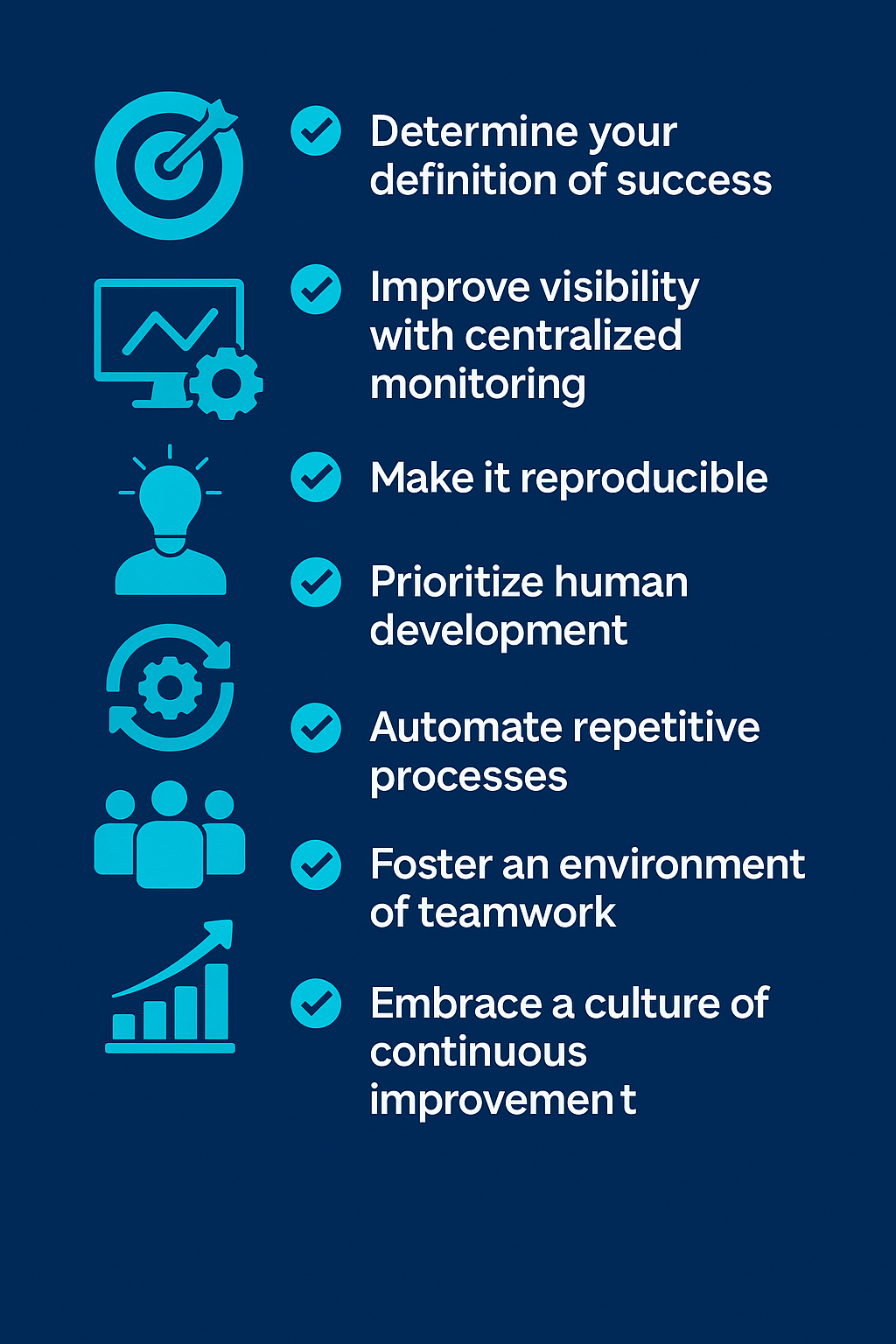
Step 1: Determine Your Definition of Success
Creating the foundation for maturity starts with purpose. Why are you working to defend in the first place, and what are the stakes? Tie your SOC's mission to corporate objectives—whether it's protecting customer data, uptime, or regulatory compliance. Key metrics such as Mean Time to Detect (MTTD), Mean Time to Respond (MTTR), system availability, and analyst case closure rates must be measured on an ongoing basis. Metrics track performance and trends. For additional perspective, it may be helpful to compare your metrics with industry benchmarks. Reducing MTTD can help reduce attacker dwell time and limit the potential impact of an incident.
Step 2: Improve Visibility with Centralized Monitoring
You can't protect what you can't observe. A mature SOC has end-to-end visibility into all digital assets—networks, endpoints, cloud workloads, applications, and users. Centralized log management with built-in threat intelligence delivers contextual and real-time visibility. End-to-end data correlation and incident triaging are achieved better through tools like Extended Detection and Response (XDR) or SIEM platforms. Consider adding behavioral analysis to detect anomalous traffic that can slip past signature-based systems. This predictive power adds a new dimension of intelligence to threat detection.
Step 3: Make It Reproducible
Mature processes are a hallmark of an effective SOC. Frameworks and standards such as the NIST Cybersecurity Framework and ISO/IEC 27001 can help structure and mature security processes, while MITRE ATT&CK offers a mechanism to map known adversary tactics and techniques. Create documented playbooks by incident type, assign clearly defined roles and responsibilities, and identify additional development needs through drills and feedback loops. Provide step-by-step checklists and escalation paths to first responders. Maintain a centralized knowledge base so everyone on the team starts from the same procedural page with greater consistency and adherence.
Step 4: Prioritize Human Development
The best asset of a SOC is its people. Critical thinkers who are technically skilled and capable of working in high-pressure situations while growing alongside new threats are irreplaceable. Promote learning through certifications (CISSP, CEH, GCIA), in-house mentoring, threat modeling, and cross-functional training. Create a career path for cybersecurity analysts to ensure continuity of knowledge within the organization and reduce turnover. Establish programs to familiarize analysts with different segments of the organization to create greater organization-wide knowledge.
Step 5: Automate Repetitive Processes
Repetition leads to burnout. Sophisticated SOCs automate routine processes—alert triage, log analysis, malware sandboxing, and so on—to allow analysts to focus on sophisticated threat hunting and analysis. Security Orchestration, Automation, and Response (SOAR) platforms automate and normalize processes and reduce the element of human error. Automation should support, but never replace, human judgment. Use data from automation logs to fine-tune both machine settings and human decision-making processes.
Step 6: Foster an Environment of Teamwork
Cybersecurity cannot be left to the SOC alone—it needs IT, risk, legal, and executive leadership to act in harmony. Develop regular threat briefs, response exercises, and escalation procedures involving all major stakeholders. Foster an open communication process in post-incident reviews, not a finger-pointing game. Externally, interact with your fellow professionals in your industry through ISACs or threat forums to stay current with trends and patterns. The exchange of threat intelligence increases your chances of earlier detection of threats and supports joint defense efforts.
Step 7: Embrace a Culture of Continuous Improvement
No SOC ever fully matures. Establish a feedback mechanism by analyzing real-world incidents, ongoing maturity tracking, and peer benchmarking against similar organizations. Keep one step ahead by monitoring threat trends, examining emerging technology, and evolving your roadmap. You should include quarterly and annual reviews in your process. All these meetings should include updates to detection rules, reviews of the false positive rate, and synopses of observed threat actor techniques throughout the year.
General SOC Mistakes to Be Avoided
- Tool Overload: Having too many one-trick platforms creates blind spots. Whenever feasible, consolidate.
- Ignoring People: Don’t just spend on machines—invest in people.
- Ignoring Alert Fatigue: Filter noise out. Prioritize actionable intelligence.
- Not Aligning with the Business: A siloed SOC will not be able to deliver value. Put business impact first in all decisions.
The Payoff: Why Leveling Up SOC Matters
A mature SOC is not simply an expense center—it is a strategic asset. It strengthens your brand reputation, develops customer trust, and delivers resilience in a world full of risk. It can also simplify compliance oversight, enhance operational efficiency, and help your security investments deliver measurable value.
A good SOC is what keeps an incident from escalating to a catastrophic data breach. It evolves into a trusted advisor to executive management, enabling the company to make well-informed, risk-based decisions.
Conclusion: Building the SOC of Tomorrow
SOC maturity is less an endpoint than a process. By applying strategic planning, operational discipline, and people-first design, your firm can stay ahead of the cyber threat environment and thrive in a digital-first world. Whether you are building your SOC from scratch or maturing your existing SOC, the secret is to approach it as a living ecosystem—one that evolves with your business. Monitor your maturity, track what is important to you, and establish a culture of collective responsibility.
Ready to level up your security operations? Start small, iterate often, and stay focused on measurable outcomes. Your future SOC will be stronger for it.
At Cybarium, we offer specialized services to help you mature your SOC into a resilient, strategic business asset that evolves with your company's needs and the cyber threat landscape. Whether you're building your SOC from the ground up or improving your existing setup, our expert team is here to help you every step of the way.